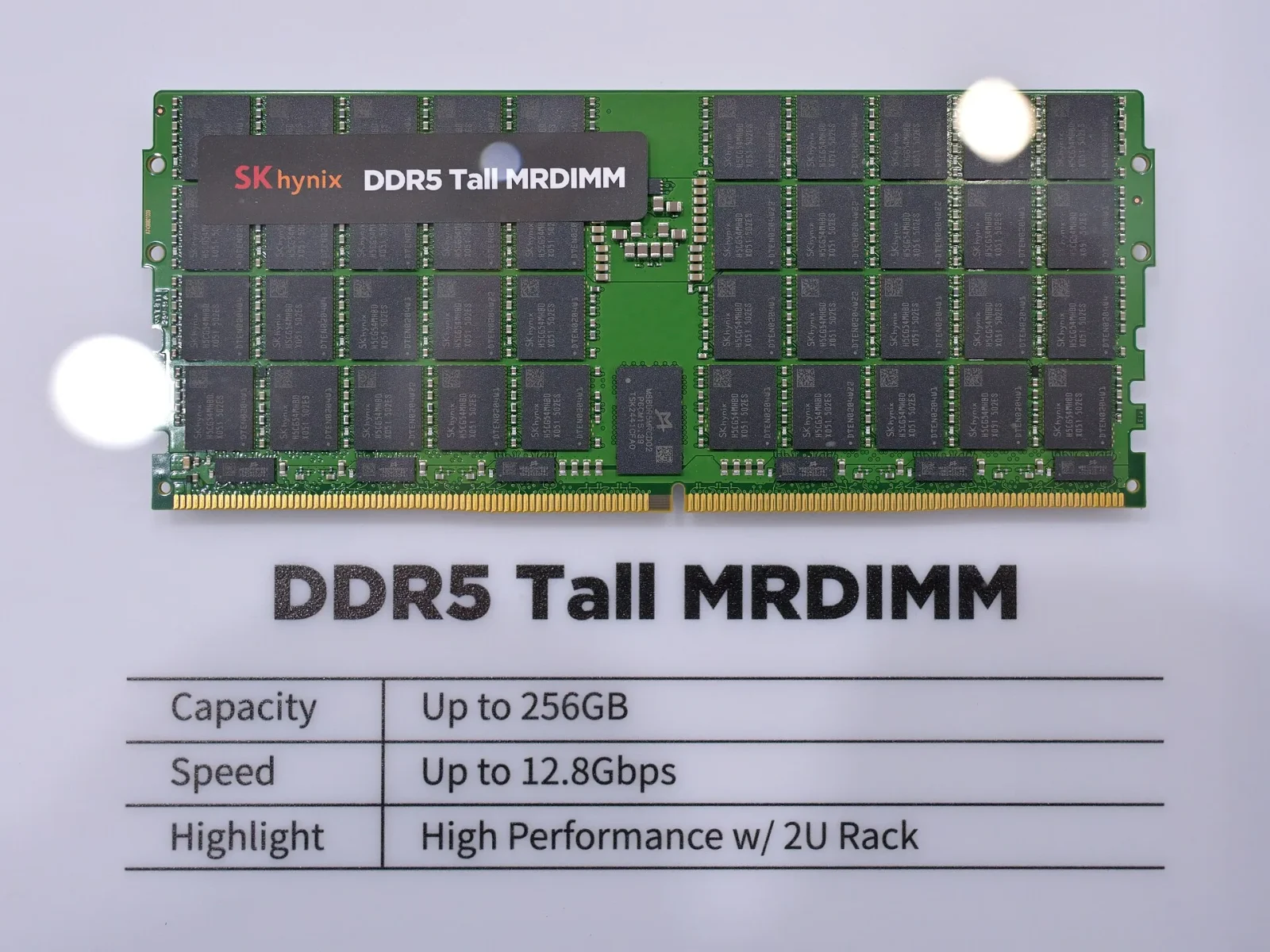
The AI infrastructure build-out is no longer just lifting prices for high-bandwidth memory used beside accelerators. It is pulling enough manufacturing capacity toward HBM and server DRAM to leave consumer DDR5 buyers competing for a shrinking pool of conventional memory.
The result is now visible at retail. U.S. retail tracking shows some high-capacity DDR5 configurations approaching 500% year-on-year price increases, while industry reports say large data-center buyers are already reserving 2027 supply. For memory equities, that physical shortage remains supportive to earnings, but the August 18 selloff showed that investors are no longer willing to price the cycle independently of the broader AI trade.
Where DDR5 Pricing Actually Is, by Region and by Source
The headline numbers need some separation because different trackers measure different products.
TrendForce reported on August 17 that Germany’s DDR5 price index reached 486% of its July 2025 baseline in August, up from 445% in July. That makes the average tracked level roughly 4.9 times the base rather than meaning every DDR5 product rose exactly 486%. Higher-capacity kits recorded many of the largest increases.
China is showing the same direction. In Shenzhen’s Huaqiangbei market, DDR5 24Gb and 16Gb products reportedly increased 14.29% week on week, reaching $48 and $40 respectively.
U.S. retail data are equally stretched. Tom’s Hardware found a 64GB DDR5-5600 configuration up about 485% year over year, while a 128GB DDR5-6400 kit was listed at $3,399, versus a historical low of $329. The latter is a comparison with its lowest tracked price, not a one-year percentage change.
Why HBM and AI-Server Memory Are Outbidding Commodity DRAM
The shortage begins with economics inside the memory fabs.
HBM consumes considerably more wafer capacity than conventional DRAM, while AI-server customers can pay higher prices and sign longer commitments. Micron has previously said HBM consumes roughly three times the wafer capacity of DDR5 per gigabyte, meaning growing HBM output constrains how much ordinary DRAM the same manufacturing base can supply.
TrendForce says suppliers have been reallocating DRAM capacity toward HBM and server applications, while North American cloud providers have increasingly sought high-capacity RDIMMs and negotiated long-term supply agreements. That leaves PC OEMs and independent module companies buying from a tighter residual pool.
This is also where DRAM differs from the NAND shortage FinanceFeeds covered on August 17 in TrendForce Forecast NAND Prices Up 70–75% in Q2, With Capacity Relief Years Away. NAND supplies SSD storage; DRAM supplies working memory, including DDR5 and the underlying dies used in HBM. AI infrastructure is tightening both markets, but through different products and capacity constraints.
The 2027 Pre-Booking and What It Means for Supply Relief
Reports that hyperscalers have already locked up almost all global DRAM capacity for 2027 should remain explicitly qualified.
Tom’s Hardware reported that hyperscale buyers have reserved almost all 2027 DRAM production capacity and provided advance deposits to secure supply. The industry-wide claim has not been confirmed independently by each major producer.
Micron’s own disclosures, however, show how far forward contracting has moved. In June, the company said it had signed 16 strategic customer agreements, generally running from 2026 through 2030, covering roughly 20% of its DRAM volume over the period. Those agreements include take-or-pay commitments, and Micron expects $22 billion of deposits and related financial commitments.
At the channel level, Apacer CEO C.K. Chang has forecast that severe shortages will persist through at least mid-2027. He also warned that the volume major producers allocate to independent DRAM module makers could fall by more than 70% year over year in 2027. That forecast refers specifically to downstream module allocations, not a 70% collapse in worldwide DRAM production.
The Equity Read After the August 18 Reversal
The shortage helps explain the sharp gains in memory stocks during 2026. As of August 18, SanDisk was up 653% year to date, Micron had gained 255% and Western Digital was up 211%. August 18 showed the limit of that argument.
By 12:50 PM EDT on August 18, SanDisk was down 9.1%, Micron had fallen 7.3% and Western Digital was down 5.3%. The selloff followed a Wall Street Journal analysis showing that nine large technology companies carried roughly $3 trillion in off-balance-sheet commitments, mostly related to AI, compared with about $600 billion a year in capital expenditure.
That was not evidence that DDR5 suddenly became plentiful. Instead, the selloff showed that investors were also reassessing how the AI infrastructure build-out is being financed. Concerns about large off-balance-sheet commitments can pressure valuations even while physical memory shortages, pricing power and AI demand continue supporting earnings expectations.
What Breaks the Cycle, and When Suppliers Say That Is
There are two obvious ways out: substantially more supply, or materially weaker AI demand.
Neither looks imminent. Micron said in its latest earnings materials that DRAM and NAND supply-demand conditions should remain tight beyond calendar 2027. Management expects industry supply to begin improving gradually in 2028 but said it does not currently have visibility on when memory supply will fully catch demand.
That leaves the market with an unusual split. Physical DDR5 scarcity still supports the earnings case for memory producers, but August 18 showed that scarcity alone cannot protect the stocks when rates and AI valuations reprice.
For investors, that is now the trade: the memory shortage is still getting worse even as the equity market has started asking how much of it is already in the price.