Rocket Lab stock (NASDAQ: RKLB) plunged as much as 13% in early Thursday trading after the company pushed the inaugural flight of its Neutron rocket into 2027, abandoning its previous fourth-quarter 2026 target. The setback prompted KeyBanc to cut its price target from $135 to $100, while Clear Street lowered its target from $129 to $105.
Shares fell to approximately $51.42 earlier on October 15, according to Proactive Investors. RKLB subsequently recovered some losses, trading at $52.72, down 10.92%, as of 12:58 p.m. Eastern time. The decline extended Wednesday’s 7.85% regular-session loss, when the stock closed at $59.18 before Rocket Lab disclosed the revised schedule.
The announcement, released after Wednesday’s US market close, initially sent shares down approximately 6% in extended trading, Reuters reported.
The delay is significant because Neutron represents Rocket Lab’s planned expansion from small-satellite launches into the larger commercial and government launch market currently dominated by established providers.
Manufacturing Defects Push Neutron’s First Flight Into 2027
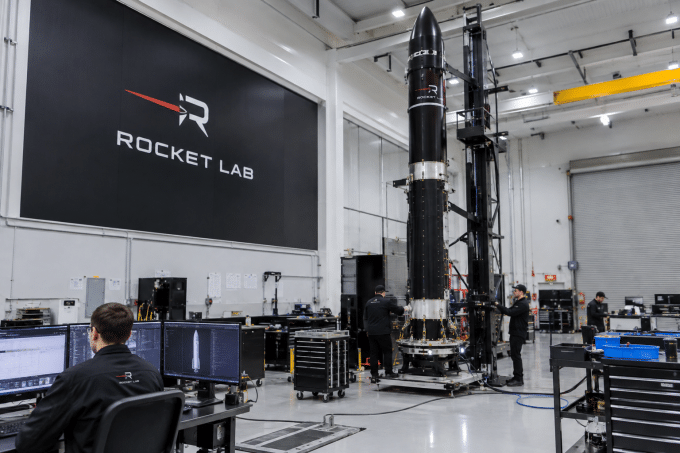
Rocket Lab confirmed on October 14 that Neutron’s first flight is now expected in 2027. The company attributed the delay to manufacturing defects involving the forward dome of the rocket’s first-stage propellant tank.
The dome is a carbon-fibre composite structure that forms part of the tank containing the rocket’s propellant. During inspection, Rocket Lab identified voids within the composite material that could reduce the structure’s performance margins.
Chief Executive Peter Beck explained that the company investigated the defect, reproduced it during testing and introduced changes to its manufacturing process. Subsequent work on another composite section, the aft dome, demonstrated improved manufacturing quality.
Although Rocket Lab says the manufacturing problem has been addressed, the forward dome must still be completed and qualified before the first-stage tank can undergo its remaining tests.
Those steps have pushed the development schedule beyond the original launch window. The company expects cryogenic and hydrostatic qualification testing to extend into the first quarter of 2027 before it can establish a firmer inaugural flight timetable.
The setback follows a separate qualification failure in January 2026, when a first-stage tank ruptured during pressure testing. Rocket Lab subsequently moved its launch target to the fourth quarter of 2026. The company has not attributed the latest forward-dome manufacturing defects to that earlier rupture.
Investor Takeaway: Rocket Lab says it has corrected the manufacturing process, but Neutron still faces major qualification milestones before its first flight can be scheduled.
KeyBanc Cuts Rocket Lab Price Target by 26%
Wall Street responded to the revised schedule with substantial reductions in Rocket Lab’s expected share value.
KeyBanc analyst Michael Leshock lowered his 12-month price target to $100 from $135, a reduction of approximately 26%, while maintaining an Overweight rating.
According to Investing.com, Leshock reduced his projections to reflect one fewer revenue-generating Neutron launch in 2027. The revised target also incorporates lower valuation multiples across high-growth space companies.
Clear Street analyst Gregory Pendy separately reduced his target to $105 from $129, a cut of nearly 19%, while retaining a Buy rating.
The revisions demonstrate how sensitive Rocket Lab’s valuation remains to Neutron’s development timetable. Both analysts maintained positive ratings despite reducing their estimates, indicating that their longer-term investment assessments have not been abandoned.
Cantor Fitzgerald, meanwhile, reiterated its $122 price target and Overweight rating on October 15. FinanceFeeds previously examined Cantor’s bullish assessment of Rocket Lab, including expectations that Neutron could eventually challenge SpaceX’s Falcon 9 in the medium-lift launch market.
The selloff also exceeded declines across several publicly traded space companies. During Thursday’s morning session, SpaceX and AST SpaceMobile were each down approximately 2%, according to 24/7 Wall St., compared with Rocket Lab’s double-digit decline.
The comparison suggests investors were responding particularly strongly to Rocket Lab’s company-specific development announcement, although broader market conditions also influenced trading.
Why the Neutron Delay Matters for Rocket Lab Stock
Neutron is designed to carry approximately 13,000 kilograms to low Earth orbit, substantially exceeding the capabilities of Rocket Lab’s Electron small-launch vehicle.
The larger rocket is central to the company’s strategy of competing for constellation deployment, national-security missions and other contracts requiring greater launch capacity.
A later debut postpones the point at which Neutron can begin generating operational launch revenue, while manufacturing, infrastructure and qualification spending continues.
Rocket Lab’s existing business nevertheless provides an important distinction between a delayed expansion program and a company without established revenue.
In the second quarter of 2026, Rocket Lab reported revenue of $234.1 million, up 62% year over year, while its contracted backlog reached $2.36 billion.
As FinanceFeeds reported following the company’s second-quarter earnings, Rocket Lab’s growing revenue and backlog contrasted with continued investment requirements and uncertainty surrounding Neutron’s initial launch schedule.
Its existing Electron business also continues securing contracts. In September, Rocket Lab announced a multiyear agreement for 20 additional Electron missions for Japanese Earth observation company Synspective, supporting its small-launch operations independently of Neutron’s development timetable.
What Investors Should Watch Before Neutron’s First Launch
The immediate milestone is completion of the forward-dome manufacturing work, followed by assembly and qualification testing of the first-stage propellant tank.
Progress through cryogenic and hydrostatic testing in early 2027 will provide stronger evidence of Neutron’s readiness than another preliminary launch estimate.
Investors will also be watching Rocket Lab’s upcoming quarterly results for changes in capital expenditure, cash consumption, contracted launch revenue and management’s assessment of remaining development work.
The latest selloff adds to substantial volatility in RKLB shares during 2026. FinanceFeeds previously documented a seven-session decline that erased nearly $10 billion in market value, highlighting how quickly investor expectations can shift around the company’s expansion plans.
Investor Takeaway: KeyBanc and Clear Street have reduced their targets without abandoning their positive ratings. The next meaningful catalyst is verified progress in Neutron’s testing program, not another estimated launch date.
Rocket Lab has confirmed that Neutron will not make its inaugural flight in 2026, but it has not provided a specific launch date for 2027. Until the remaining manufacturing and qualification milestones are completed, the timetable for commercial operations remains uncertain.