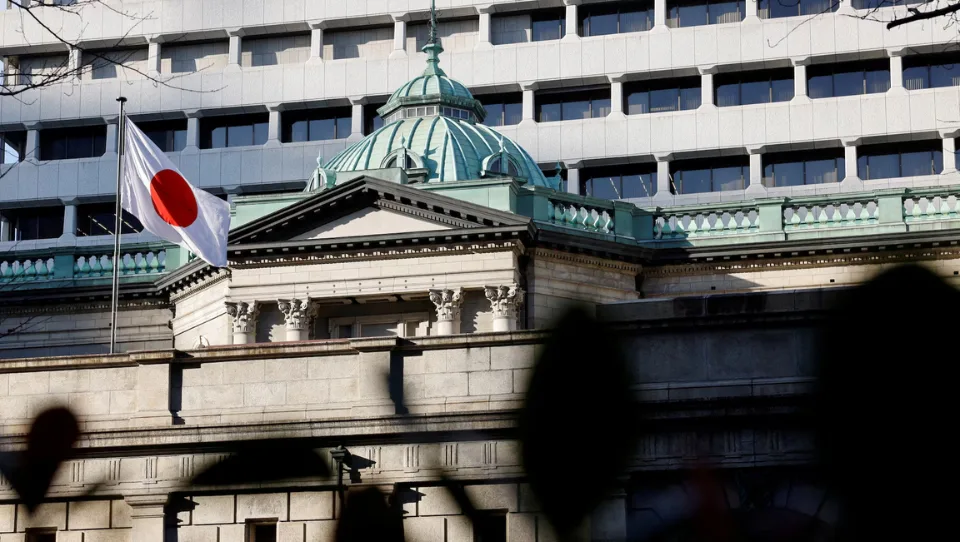
The Bank of Japan (BoJ) rate decision on September 18 raised Japan’s policy rate by 25 basis points to 1.25%, its highest level since 1995, but the market reaction inverted the textbook. The yen weakened rather than strengthened, because the hike came on a split 7-2 vote with two board members dissenting, and both were reflationists appointed by Prime Minister Sanae Takaichi earlier this year. For an FX readership, the shape of the vote is the tradable signal, not the quarter-point itself, and it points to a shallower rate path than the headline implies.
The move itself was almost fully anticipated, with the market having priced the hike at roughly 90% going into the meeting. What the market had not fully priced was two dissents. The BoJ rate rose to 1.25% from 1%, effective September 24, with the uncollateralized overnight call rate as the target, and the Bank said it “judged it appropriate to adjust the degree of monetary accommodation” toward the sustainable achievement of its 2% price target, in its own Statement on Monetary Policy. The rationale was inflation risk, but the caveat was that accommodative conditions would be “maintained after the change.”
The yen weakened after the BoJ rate decision, with USD/JPY pushing past 157 before settling near 156.8. Source: TradingView.The BoJ Rate Decision Hiked to 1.25%, Three Months After the Last Move
The BoJ rate now sits at a level Japan has not seen since 1995, as CNBC reported, and the pace is what stands out as much as the level. The hike landed just three months after the June increase to 1%, against the roughly six-month cadence before it, which Governor Kazuo Ueda called the shortest interval between hikes since the bubble era, per Jiji Press. Core inflation excluding fresh food ran at 1.7% in August, down from 1.8% in July, so the Bank was tightening with its preferred gauge still below target.
The decision arrived inside a political vise, as US Treasury Secretary Scott Bessent has pressed Tokyo to tighten and to stop the yen’s slide, while Takaichi has pushed the BoJ to keep rates low to support government spending. The two dissenting votes came from her own appointees, which is why the split reads as more than procedural noise.
Asada and Sato Voted No, and Both Owe Their Seats to Takaichi
The BoJ statement records the split plainly: “Voting against the action: ASADA Toichiro and SATO Ayano.” Asada dissented, in the statement’s own words, “considering that, with the rate of increase in the CPI (all items less fresh food) being below 2 percent recently, it could not necessarily be said that the economic situation” warranted a hike now, favoring a hold. Sato argued that economic and price developments had not substantially accelerated relative to before. Both are seen as reflationists, and both owe their board seats to Takaichi.
Two hawkish members are due to leave the board next year, so if their replacements lean dovish, the dovish bloc could grow toward four of nine seats without the majority ever flipping. The statement also carried a hawkish counter-note, with board members Takata and Tamura opposing the price-outlook language on the view that inflation had already reached target, so the board is fracturing at both ends, not just the dovish one.
Investor Takeaway
The 7-2 split is the signal, not the hike, since two dissents on a widely expected move tell markets the board is divided on how much further this cycle runs.
Why the Yen Fell Past 157 on a BoJ Rate Hike
A rate hike normally supports a currency, so the yen weakening is the tell that markets read the meeting as dovish. USD/JPY pushed past 157 intraday before settling around 156.8, up about 0.5% on the day, per TradingView data, while the 10-year Japanese government bond yield slipped about 4.9 basis points to 2.947% and the Nikkei 225 rose 1.5%. Every one of those moves is the opposite of what a credibly hawkish tightening produces.
The strategist read was explicit. SMBC’s chief FX strategist Hirofumi Suzuki said the two dissenting votes “came as a modest surprise” and “tempered expectations for further rate hikes,” conveying a dovish impression, and Bloomberg reported that Ueda’s less-hawkish press-conference tone extended the yen’s losses.
Ueda himself said the Bank does not “assume a specific pace for further interest rate hikes,” which is the language of optionality, not commitment. That combination keeps the yen-carry trade attractive, since a shallow, uncertain BoJ path preserves the rate gap against the Fed’s 3.75% to 4% range, and it explains the fresh pressure the yen has faced against both the dollar and the pound.
A Cleaner December Vote Is the Test the Yen Will Trade
The next test for the BoJ rate is December, and the debate is about where this cycle ends. Economists surveyed by Reuters project the rate reaching 1.5% by March 2027 and 1.75% in the following quarter, and the current 1.25% sits inside the BoJ’s own estimated nominal neutral range of 1.1% to 2.5%, a wide band that leaves the terminal rate genuinely unsettled. A unanimous or near-unanimous December hike with firmer guidance would confirm the cycle is real; another split with dovish dissents would reinforce the read that it is being staged rather than driven.
For markets, the appointments matter as much as the meetings. If Takaichi fills the two seats opening next year with centrists, the dovish drift is contained and the path stays intact; if she picks reflationists, the board tilts dovish and the yen’s structural weakness persists. That is the variable to watch beneath the headline rate, and it is why a 7-2 BoJ rate decision carries more information for the next two meetings than the quarter-point hike that grabbed the headline. The same crosscurrents are visible across the wider tape, from a firmer dollar to gold’s move as the BoJ hike reshaped the metals bid and the broader hawkish-BoJ FX backdrop.
Investor Takeaway
December is the confirmation test, since a cleaner vote with firmer guidance would validate the cycle while another dovish split would cap it, and the yen will trade the difference.