
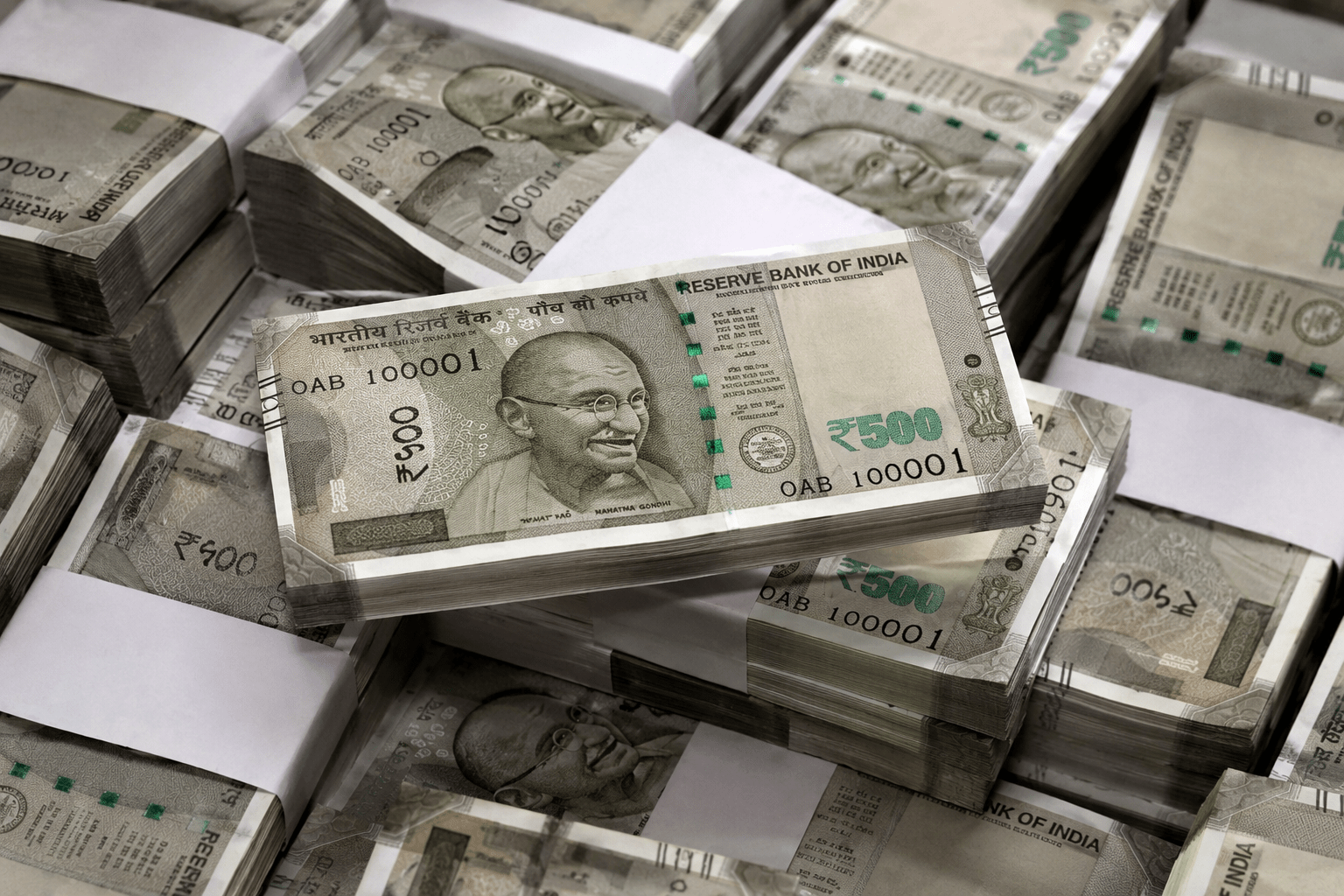
India’s rupee is under mounting pressure as oil prices stay elevated, with ING Economics ’ Deepali Bhargava warning that weak capital inflows, rather than the current account deficit, are driving the sharp depreciation.
Policymakers have shielded consumers with subsidies, but the strain has shifted to the currency.
India’s resilience to the latest oil shock is being tested in financial markets.
While fuel subsidies and diversified energy sourcing have cushioned inflation, the rupee has borne the brunt of the adjustment.
The currency’s slide reflects deeper structural weaknesses, particularly chronically soft capital inflows.
According to ING’s Asia‑Pacific Chief Economist Deepali Bhargava, “Unless those inflows recover, the rupee’s vulnerability is likely to persist.”
She noted in ING’s latest research report that the external position is far from crisis territory, but portfolio outflows and weak foreign direct investment have left the rupee exposed.
The question now is how long India can sustain its current strategy if oil prices remain high.
Wholesale price inflation has already surged, and second‑round effects on consumer prices could complicate the outlook.
Shielding consumers from oil shock
India has limited the pass‑through of higher global oil prices to retail fuel costs, raising gasoline and diesel prices only modestly.
Gasoline prices rose about 8% in May, making India one of the least affected economies in Asia in terms of direct pump‑price increases.
As a result, consumer inflation has been contained, rising just 20 basis points.
However, wholesale price inflation doubled to 8.3% year‑on‑year in April, driven by a 25% surge in fuel and metal prices.
Food inflation is also firming, with global rice and edible oil prices climbing. Bhargava cautioned that “if elevated oil prices persist, upstream cost pressures will increasingly be passed through to consumers.”
Growth impact and energy substitution
Despite higher oil costs, demand indicators remain resilient.
Electronics imports surged 38% year‑on‑year, underscoring robust consumer demand. Yet supply disruptions in chemicals could weigh on growth.
India’s structural decline in oil intensity has helped cushion the blow. Oil imports as a share of GDP have fallen from 8.8% in 2013 to 4.8% last year, reflecting the expansion of services.
Coal substitution in power generation has also reduced reliance on oil, though coal output fell nearly 10% in April, raising supply concerns.
Rupee under pressure
The rupee’s weakness is striking. ING forecasts the current account deficit widening to 2.1% of GDP in 2026, still below past stress episodes. Yet the currency has depreciated sharply, driven by weak capital inflows.
India’s equity market premium to emerging markets has narrowed, with valuations still stretched.
Foreign institutional investors have continued to pull money, while net FDI inflows remain compressed.
“The currency weakness reflects valuation‑driven capital outflows rather than macroeconomic stress.”
Policy options and outlook
India has historically used Non‑Resident Indian deposit schemes to attract foreign currency, raising $25 billion in 2013. Replicating that success today would be harder, given higher global interest rates and stronger FX reserves.
Bhargava expects USD/INR to end the year at 95.50, with risks skewed toward gradual stabilisation rather than disorderly weakening.
A combination of RBI FX management and the recent correction in the real effective exchange rate should help limit further downside.
India’s ability to shield growth and inflation from higher oil prices has been notable, but the rupee remains vulnerable.
With capital inflows weak and wholesale inflation rising, policymakers face a delicate balancing act.
As Bhargava summed up, “The adjustment is already well underway, but unless inflows recover, the rupee’s vulnerability will persist.”
The post Weak inflows leave rupee exposed as oil prices stay high, warns ING appeared first on Invezz