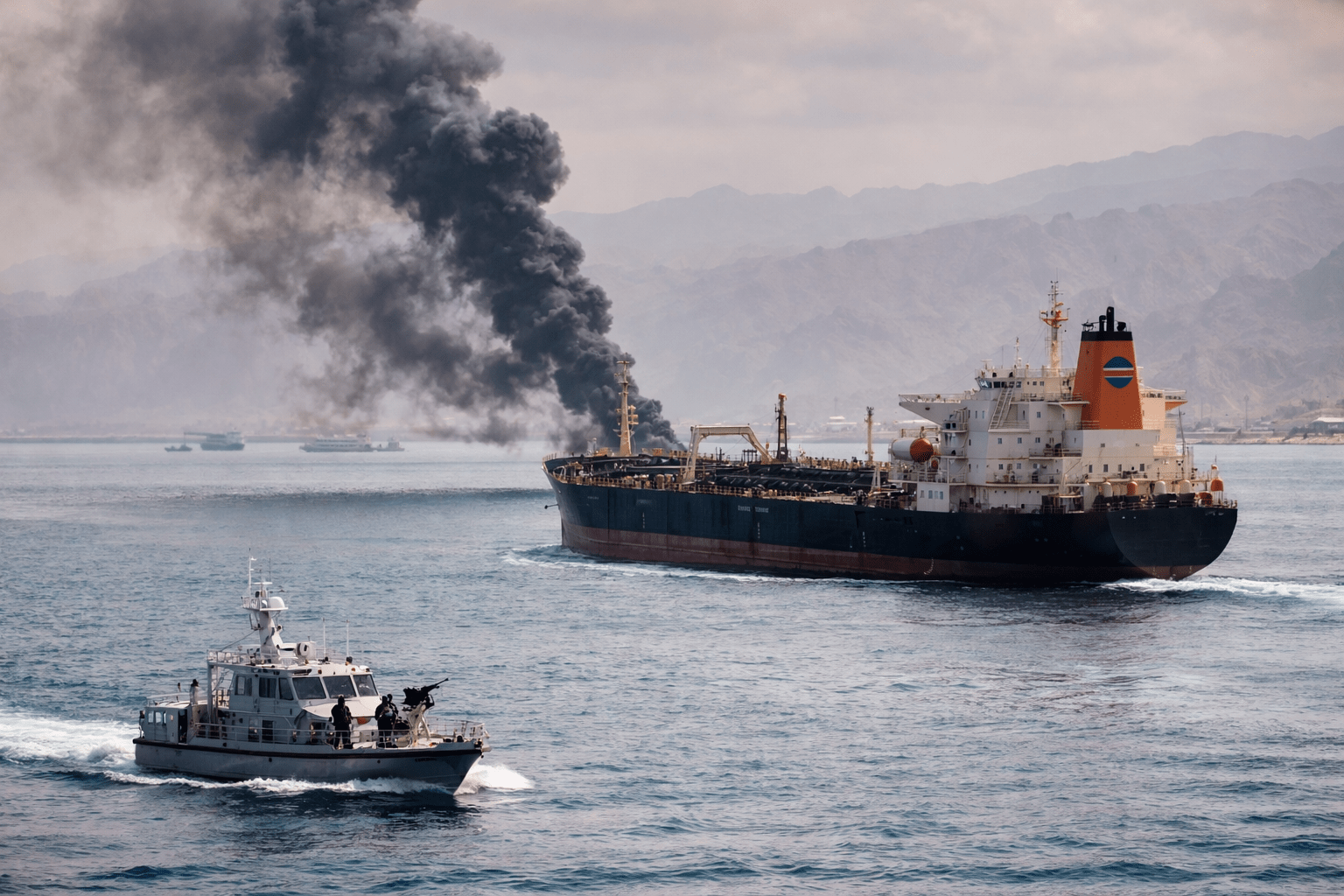
A fragile ceasefire between the United States and Iran faced an early test after Tehran halted oil tanker traffic through the Strait of Hormuz, raising fresh concerns about global energy supply and market stability.
The disruption came just hours after both sides agreed to reopen the critical shipping route as part of a two-week truce, underscoring the volatility surrounding the conflict and its broader economic implications.
Strait closure rekindles supply fears
Iran’s decision to stop tanker traffic marks a significant escalation, effectively breaching the terms of the ceasefire.
State media said the move was in response to intensified Israeli strikes on Lebanon, which were not covered under the US-Iran agreement.
The Strait of Hormuz, a vital artery for global energy markets, typically handles about one-fifth of the world’s oil flows.
Any disruption to this route has immediate implications for crude prices, shipping costs, and broader inflation expectations.
The situation was further complicated by Iran attacking Saudi Arabia’s east-west pipeline, currently its only crude export outlet, adding another layer of supply risk.
Other Gulf nations also reported waves of drone attacks, highlighting the widening scope of the conflict despite the ceasefire framework.
Israel-Lebanon strikes escalate tensions
The ceasefire’s limitations became evident as Israel carried out one of its largest coordinated attacks in Lebanon.
According to Lebanon’s health ministry, at least 89 people were killed and around 700 wounded in strikes that hit approximately 100 targets within 10 minutes.
Donald Trump later confirmed that Lebanon was not part of the truce agreement with Iran, effectively separating the two conflict tracks.
Israeli Prime Minister Benjamin Netanyahu reiterated that military operations against Hezbollah would continue, contradicting earlier suggestions from Pakistani Prime Minister Shehbaz Sharif that the ceasefire could extend to Lebanon.
On the ground, the scale of the strikes overwhelmed emergency services. The head of Lebanon’s syndicate of doctors, Elias Chlela, called for “all physicians from all specialities” to assist, a Reuters report said, while hospitals appealed for blood donations.
“Hezbollah was informed that it is part of the ceasefire – so we abided by it, but Israel as usual has violated it and committed massacres all across Lebanon,” said Hezbollah lawmaker Ibrahim al-Moussawi in the Reuters report.
Nuclear talks and fragile diplomacy
Amid the escalating tensions, Washington and Tehran signaled a willingness to continue negotiations.
Trump said the US would work with Iran to remove “deeply buried” uranium as part of broader discussions.
“The United States will work closely with Iran,” Trump said, adding that “There will be no enrichment of Uranium.”
Vice President JD Vance described the ceasefire as “fragile,” warning of potential consequences if Iran fails to adhere to its commitments.
Trump also indicated that negotiations would take place privately, stating: “There is only one group of meaningful ‘POINTS’ that are acceptable to the United States, and we will be discussing them behind closed doors during these negotiations.”
Despite a 10-point proposal from Tehran, significant gaps remain between the two sides, suggesting that a durable resolution is far from certain.
Markets brace for volatility
For financial markets, the renewed disruption to the Strait of Hormuz represents a critical risk factor. The waterway’s closure, even temporarily, threatens to tighten global energy supply and reignite inflationary pressures.
The combination of geopolitical uncertainty, supply disruptions, and fragile diplomacy is likely to keep markets volatile in the near term, with investors closely monitoring whether the ceasefire can hold—or unravel further.
The post Hormuz shut again: Iran breach tests fragile US ceasefire deal appeared first on Invezz